Concert Reviews
Three Spires Singers
Truro Cathedral, 4th July 2026
I Was Glad — Parry
Mass in D — Dvořák
Toccata (Symphony no. 5) — Widor
Laudate — Dupré
Mass in C# Minor — Vierne
Grand Choeur Dialogue — Gigout
Psalm 150 — John Rutter
Various formulae for programming a concert have endured because they have
proved their effectiveness. Of the fifteen hundred or more concerts I have heard
over the last 60 years, the vast majority have followed one such formula. But those
that linger in the memory are often those that press the boundaries of programming.
One such was of Andras Schiff and Friends playing, in a first half lasting over an
hour, three late Haydn piano trios with ALL the repeats. Given that these pieces are
amongst Haydn’s most intellectually high-powered works, the second half,
Beethoven’s Archduke Trio, felt like light relief — not a description one would
normally apply to a chamber work of such sweep and power. What an evening!
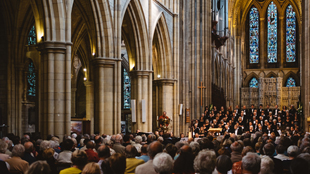
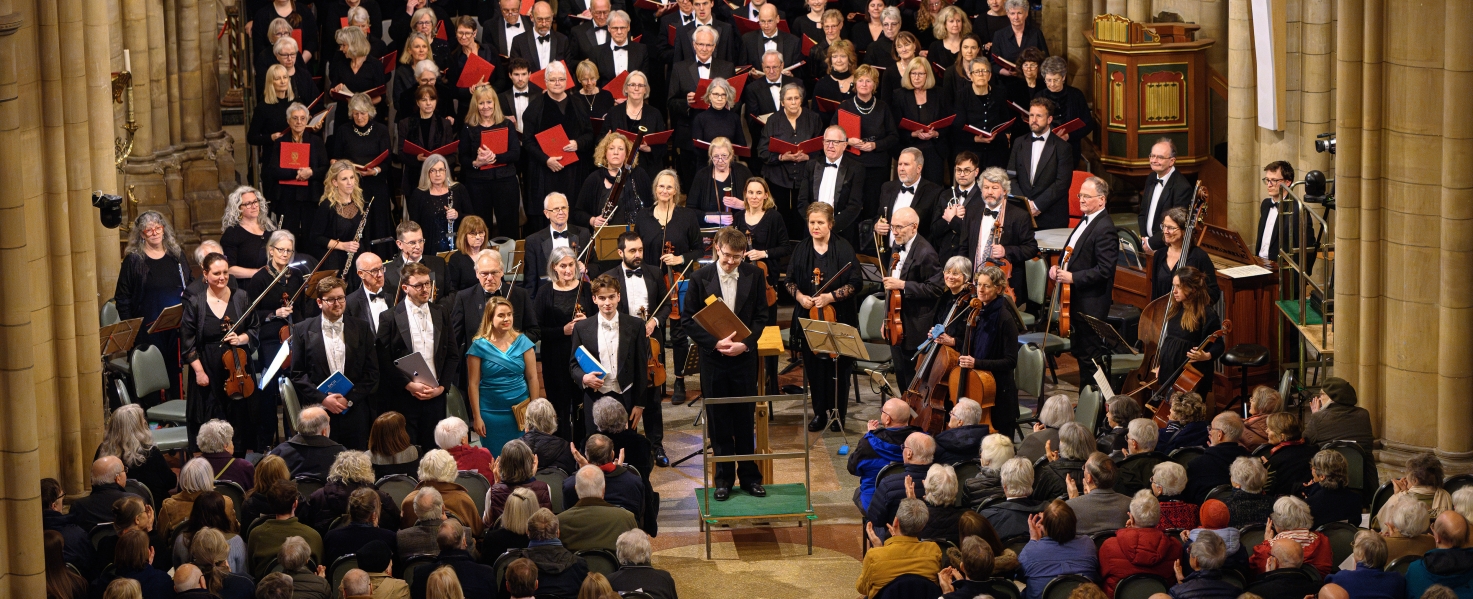
This concert programme, presented by the Three Spires Singers, Abbey Brass and
various soloists, and conductor James Anderson-Besant, was a another boundarypusher,
and a surprisingly effective one. The seven pieces, all written between the
mid-19th century and the present, were for various combinations of chorus, brass,
soloists and organ; and each half included a Mass setting lasting between 30 and
40 minutes, plus a sequence of shorter works highly contrasted with one another,
several of them rarities. What made it work so well, in addition to the good standard
of performance, was the grouping of contrasts and some subtle connections
between those contrasts.
Before the concert I was warned that this might prove the loudest ever concert by
Three Spires. Well, some parts of it sounded like that; though this was not a
programme that bludgeoned the ear. As an opening piece Parry’s I Was Glad was
an excellent choice, and powerfully played and sung too. It was especially
rewarding to hear a proper crescendo on the opening “glad”, which all too often is
lost via volume burn-out on the preceding “I was”. Although the choral and
instrumental (organ and brass) sound was subtly quiet where that’s called for, other
passages were what they should be — loud!
Dvořák’s Mass in D is a beautiful piece that the composer wrote in 1887, at the age
of 45. Although this was not my first hearing of the piece, several aspects of it
struck me afresh, partly because of the composer’s subtle yet striking techniques
and partly because of the sensitivity of the performance. The “Gratias agimus tibi” is
beautifully scored for choir, with many phrases in melodically sensuous parallel
thirds against a largely independent organ backdrop. The choir carried this off well,
with good tuning. That was true of the entire performance, with the singular
exception of the “Benedictus”, where some of the many imitative entries of
individual lines were not quite out-of-tune, but tended to be at the bottom of the
pitch, so to speak. Things that lingered in the memory included the impeccable
tuning of the four soloists in the “Sanctus”, all of them current or former members of
the cathedral choir, plua the beautifully effective winding down of the tempo at the
end of that same movement.
For this performance, Dvořák’s setting of the “Credo” section was omitted, making
this Mass in D a very effective kind of Missa Brevis (Short Mass), a genre with a
centuries-long tradition defined by the omission of one or more of the Mass
sections, especially the “Credo”. For this concert’s other Mass setting no such
adaptation was needed, for Vierne’s Mass in C# Minor was composed as a Missa
Brevis. It was written in 1899, when the composer was 29, the year before he was
appointed titular organist at the Cathedral of Notre Dame in Paris. The original
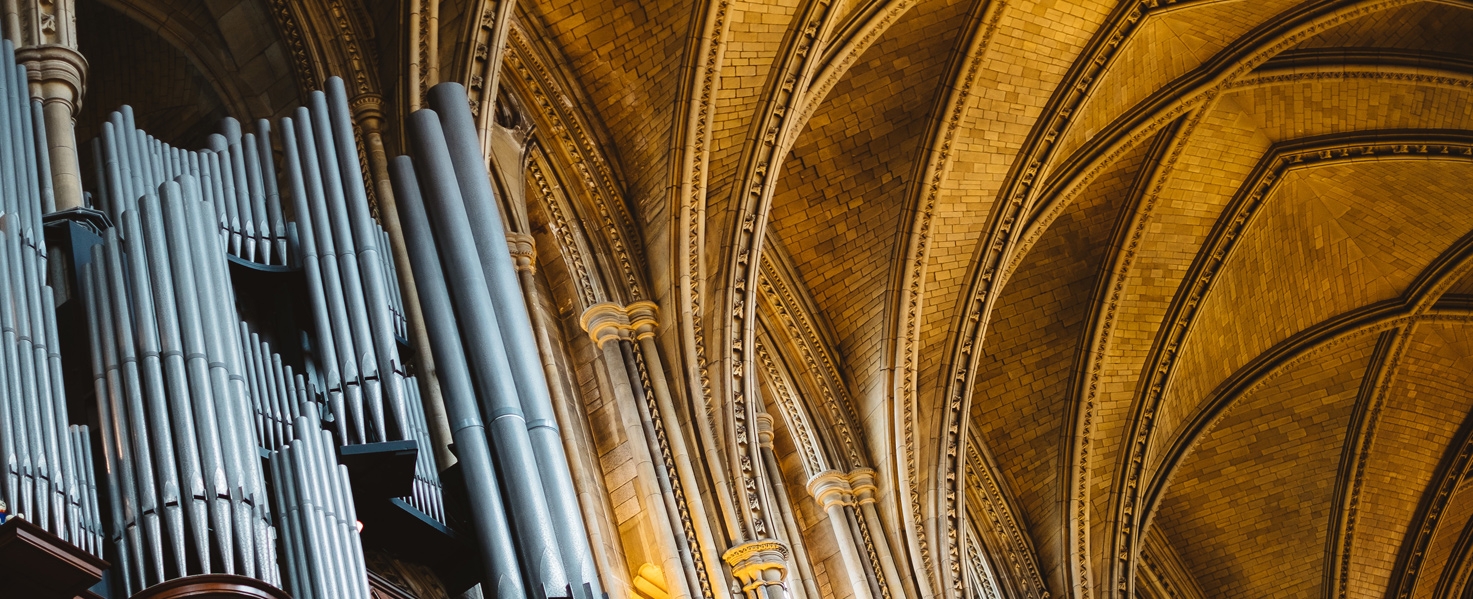
scoring was for two organs and choir, but on this occasion the Willis organ of Truro
Cathedral was augmented by Abbey Brass — though the printed programme did
not say who undertook the arrangement.
For me, this was a first hearing of a work that astonished me and my companion,
both through the power of its ideas and through the aptness and dramatic effect of
the arrangement for organ and brass. Although Vierne produced a number of
orchestral and chamber works, he is best known for his organ compositions — the
only works I know. Like so many of these organ works, this Mass setting wears its
compositional techniques on its sleeve and relies on open displays of singlemindedness
to create dramatic effects. Character and contrasts are vivid. The choir
was always impressive both in technique and in covering the music’s wide
expressive range. It was clear that this music had captured the singers’
imaginations. I was especially struck by the power of the concluding “Sanctus”,
which featured some remarkably coloured organ registration and brimmed with an
almost breathless tension.
The programme included one purely instrumental piece, and it was a good choice
to follow the Vierne. Grand Choeur Dialogue by Eugene Gigout (an older, organistcomposer
contemporary of Vierne) could be performed by two organs, but on this
occasion featured Abbey Brass and the cathedral’s organ. The printed
programme’s description of the piece is apt, in saying that much of it is based on a
fanfare idea bounced back and forth between the organ and (on this occasion)
brass. It makes its mark; and not only because so much of it is very loud! For some
reason I found myself thinking of that scene in Fawlty Towers where Sybill tells
Basil, listening to an orchestral recording in the hotel office, to “Turn off that racket.”
In response he yells “Racket? That’s Brahms’ third racket!” Well, Gigout might not
be a Brahms; but on this occasion his music did produce a racket that was glorious.
The concert ended with the kind of loudness that is less concerned with
impressiveness than with an almost rumbustious joy. John Rutter’s setting of Psalm
150 was written in 2002 for the late Queen Elizabeth’s Golden Jubilee. It’s an
unbuttoned piece, emphatically jolly and accessible. It’s Waltonesque contrasts of
brass and choir (think of Belshazzar’s Feast) and its rhythmic drive made an apt
conclusion to this well-devised programme.
Aptness was one of the main reasons why this unconventional programme worked
so well. That concluding pair of pieces made a kind of rhyme with the way in which
the first half had concluded. Back then, immediately after the Dvořák Mass in D, we
had heard Widor’s famous Toccata from his Symphony No. 5 for organ, played by
Andrew Wyatt. That piece is in F; and without giving the audience a chance to
applaud, James Anderson-Besant got up to conduct Marcel Dupré’s setting of part
of Psalm 116, Laudate, which was written in 1916 and is in the same key. This was
a first hearing for me of this forceful and direct piece. The key and the timing of
those two pieces made the first function almost as a prelude to the second. Joinedup
thinking and imagination.
Martin Adams
Some comments from an audience member about our recent Rachmaninov & Tavener concert:
"The whole concert was imaginatively conceived and brilliantly executed.....The dynamic range of the choir was so impressive:bold confident forte passages but also sustained piano passages that had a moving stillness. I will long remember the Nunc Dimitis and Henry Laird's contribution.....I was impressed by the effortless way the choir undertook the challenge of pronouncing complex multi-syllabic words."
We tried something rather different for this concert. A space was left under the cathedral tower for audience members to bring cushions or a beanbag to lie and listen to the music in an immersive way. A comment was " I really enjoyed sitting in the beanbag space and found the experience really nourishing!"
Not an official review but some comments about our performance of The Dream Of Gerontius on November 16th!
From a couple of orchestra members:
What an amazing concert tonight. I felt I had to write to you straight away to say that The Dream of Gerontius was both magnificent and moving. James did a wonderful job keeping everyone together and always with a smile on his face. It was such a privilege to be part of it.... Please do pass on my congratulations to James. He should be incredibly proud of what he achieved tonight.
Just wanted to say a huge thank you to you for organising such a fantastic (and huge) band last night. I thought that James did a wonderful job of steering the ship- the chamber choir was amazing- the choir had really stepped up a notch from our last concert- and the whole experience was a joy!
And from one of our Patrons:
Thank you all at Three Spires for last evening’s extraordinary performance of the Dream of Gerontius. Something certainly took flight in the Cathedral last evening – it wasn’t flawless technically, I would be lying if I said that it was – but it had a commitment and sheer raw emotion which I have experienced on few previous performances of this great work and it has been my privilege to hear many over the last fifty years. I confess that the tears were streaming down my face as the Angel’s Farewell was so beautifully sung by Frances Gregory. An old friend of mine, sadly no longer with us, once said to me about any performance of a choral masterpiece such as Gerontius, “Unless your audience is being carried out on stretchers at the end, you’ve failed.” Light hearted, perhaps, but with truth in it. I can honestly say that I needed a stretcher at the end of last evening’s performance. It moved me like few other performances have done. Thank you to all concerned. Magnificent.
Click on the links for a selection of reviews from earlier concerts
Nov 2024
Summer 2024
Review of Bach's masterpiece, conducted by James Anderson-Besant
Review of Christopher Gray's final concert with Three Spires Singers
Graham Fitkin, Humphry Davy The Age of Aspiration
( Ist performance)
Poulenc Gloria,
Ravel Piano Concerto
Elgar, The Kingdom concert
Kingdom review Nov 2019.docx
Bach, Handel, Buxtehude, July 2019
Bach Handel and Buxtehude.docx
Prokovief, Rutter and Vaughan Williams Concert
Prokovief Rutter Vaughan Williams.docx
Review of WWI Centenary Concert
WWI Centenary Concert review.pdf
Bach: Mass in B Minor concert
2018 March Bach B Minor Mass.pdf
Dvorak and Schumann, November 2017
Stabat Mater Nov 2017 review.pdf
Mendelsohn Elijah, April 2017- a joint concert with Truro Choral Society
Philip Buttall TSS TCS Elijah
Handel Messiah, December 2106 - we were joined on this occasion by choristers from Truro School Chamber Choir
Rachel Beaumont: Messiah
Brahms German Requiem, July 2016
Philip Buttall: Brahms Requiem
Finzi, Tchaikovsky, Elgar and Mendelssohn, November 2016
Philip Buttall: Finzi and others
Elgar The Kingdom,with Truro Choral Society, April 2014
Judith Whitehouse: Elgar The Kingdom
Russell Pascoe, Secular Requiem; Strauss, Four Last Songs March 2013
Judith Whitehouse: Russell Pascoe Secular Requiem